Factory Automation Malaysia: Building More Efficient Manufacturing Operations
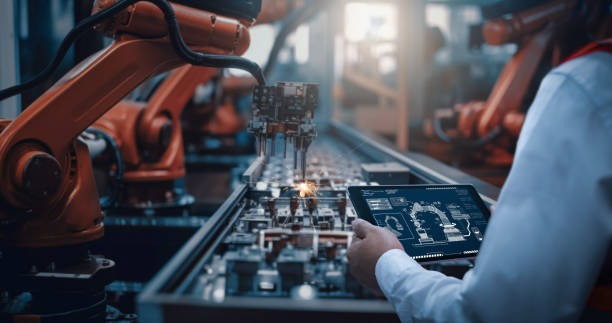
Manufacturers are continually looking for practical ways to improve productivity, maintain consistent quality and respond to changing customer requirements. factory automation malaysia can involve the use of machinery, control systems, sensors, robotics and software to automate selected production processes and reduce reliance on repetitive manual operations.
Automation does not necessarily mean replacing an entire production line. Businesses can introduce automated systems gradually, focusing first on processes where improvements in speed, consistency, safety or data collection may provide the greatest operational value.
Understanding Factory Automation
Factory automation refers to the use of technology to control or perform manufacturing activities with varying levels of human involvement. Applications can range from simple automated material handling to integrated production lines using programmable controllers, sensors, robotic systems and industrial software.
Manufacturers exploring factory automation malaysia should begin by identifying specific production challenges. Cycle times, quality issues, repetitive tasks, labour requirements and equipment downtime can all provide useful information when determining where automation may be appropriate.
Start with Process Assessment
Before investing in automation, manufacturers should examine how their current processes operate. A detailed assessment can identify bottlenecks, unnecessary movements, inconsistent procedures and tasks that require significant manual intervention.
Production volume is another consideration. A highly automated solution may be suitable for repetitive, high-volume manufacturing, while flexible or semi-automated equipment could be more practical when product variations are frequent.
Clear objectives make it easier to evaluate whether an automation project delivers the intended operational improvements.
Integrating Existing Equipment
Many factories operate machinery installed at different times and using different control technologies. A factory automation malaysia project may therefore need to integrate new equipment with existing machines rather than replace everything at once.
Manufacturers should evaluate electrical interfaces, control systems, communication protocols and data requirements during the planning stage. Early consideration of compatibility can reduce integration challenges during installation and commissioning.
Quality Control and Production Data
Automation can support more consistent production by performing repetitive processes according to programmed parameters. Sensors and inspection technologies may also be incorporated to monitor selected characteristics during manufacturing.
Production data can provide additional insight into cycle times, equipment conditions and process performance. However, businesses need appropriate systems for collecting, interpreting and protecting this information if they want to use it effectively.
Safety in Automated Environments
Industrial automation introduces moving machinery, electrical equipment and interaction between operators and automated systems. Safety should therefore be considered throughout design, installation and operation.
Risk assessments, guarding, sensors, emergency controls and suitable operating procedures may be required depending on the application. Employees should also receive appropriate training before working with new equipment.
Maintenance and Future Scalability
Automated systems require ongoing maintenance. Manufacturers should consider spare parts, technical documentation, software support and access to engineering assistance before selecting a solution.
Future requirements are equally important. Where practical, systems can be designed to accommodate additional production capacity, new product variants or other foreseeable operational changes.
Conclusion
factory automation malaysia can help manufacturers modernise selected processes through machinery, controls, sensors, robotics and integrated digital systems. Effective automation begins with a clear understanding of existing production challenges and measurable objectives. By considering integration, quality, safety, maintenance and future scalability from the beginning, businesses can develop automation strategies that align with their manufacturing requirements and long-term operational plans.